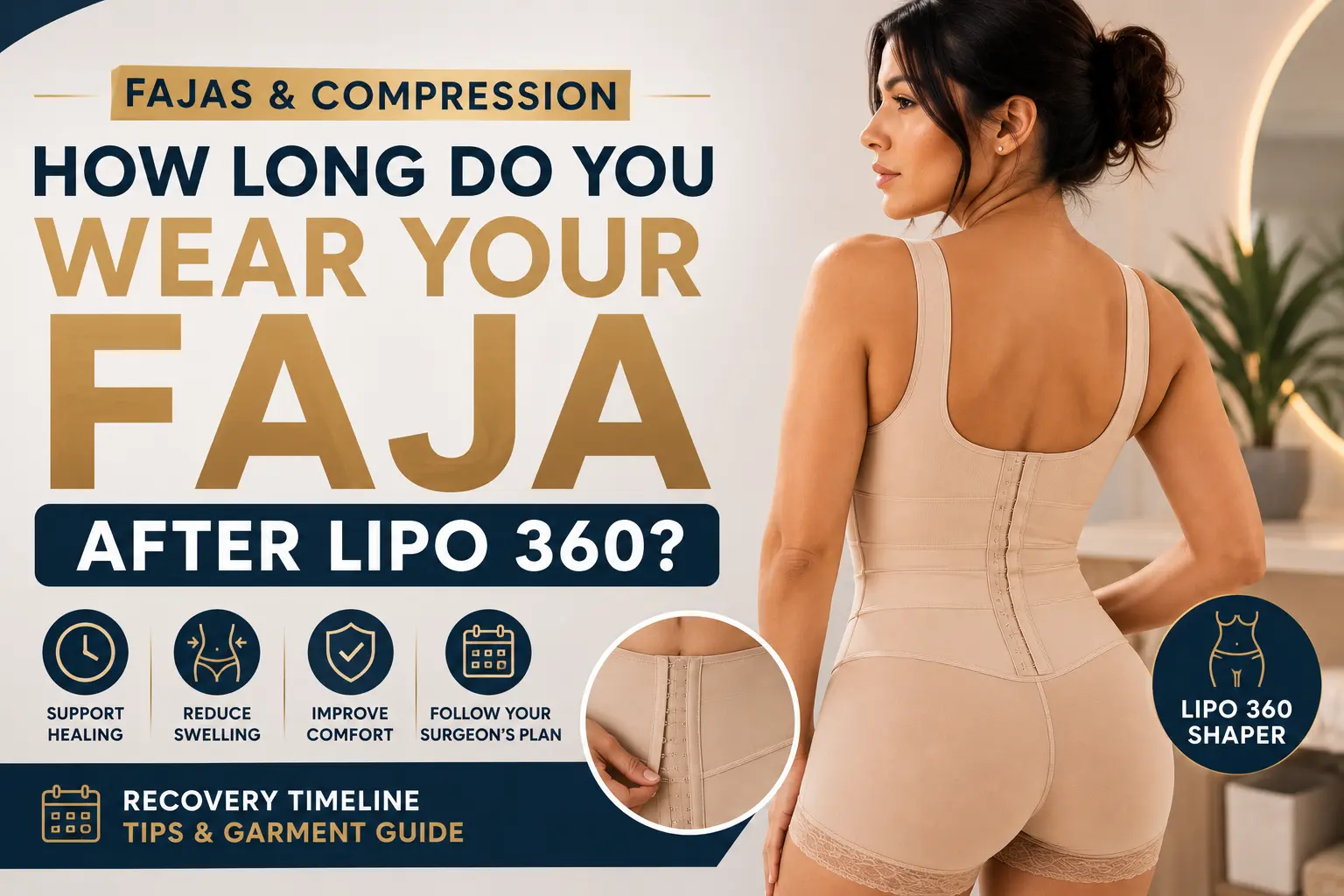
One of the most important — and most underestimated — parts of recovery after liposuction is compression therapy. Patients often focus heavily on the surgery itself while overlooking how much post-operative care affects swelling, contour smoothness, and final body shape. This is why one of the most common recovery questions patients ask is: how long do you wear your faja after lipo 360?
A faja, or compression garment, plays a major role during healing because it helps the body adapt after fat removal. Following Lipo 360, the body experiences swelling, fluid retention, inflammation, and temporary tissue irregularities as it recovers from surgery. Proper compression helps support the healing tissues while encouraging smoother contour formation throughout the abdomen, waist, flanks, and lower back.
While every surgeon has slightly different recovery protocols, most patients wear some form of compression for several weeks or even months after surgery. However, the type of garment, tightness level, and duration of use often change as healing progresses.
Why Compression Matters After Lipo 360
Lipo 360 removes fat circumferentially around the torso, which creates extensive internal swelling beneath the skin. After surgery, the body naturally produces inflammation and fluid buildup as part of the healing process. Without proper compression, this swelling can become more uncomfortable and may interfere with smooth contour development.
A properly fitted lipo 360 shaper helps:
- Reduce swelling
- Improve comfort during recovery
- Support skin retraction
- Encourage smoother contouring
- Minimize fluid accumulation
- Stabilize healing tissues
Compression garments also help patients feel physically supported during the early stages of healing when soreness and tightness are most noticeable.
One important thing patients should understand is that compression does not create the surgical result by itself. The surgery determines the contour, but proper aftercare helps optimize healing and reduce complications that could affect final appearance.
How Long Is a Faja Typically Worn?
Although recovery protocols vary between surgeons, most patients wear compression garments consistently for at least several weeks after surgery. During the earliest stage of recovery, compression is often worn almost continuously except during showering.
The first phase of healing is usually the most demanding because swelling peaks during this period. Patients commonly wear their faja:
- Day and night
- During sleep
- While walking or resting
- For most hours of the day initially
As swelling gradually decreases, surgeons may allow patients to reduce compression hours or transition into lighter garments.
For many individuals, the total compression timeline extends beyond the first month because residual swelling can persist for a long time after body contouring surgery. Some patients continue wearing compression garments intermittently for comfort and support even after the most critical recovery phase has passed.
Understanding Different Compression Stages
Recovery after Lipo 360 often involves multiple garment stages rather than one single faja throughout the entire healing process. The first garment is usually softer and designed to accommodate heavier swelling immediately after surgery.
During the early stage, compression focuses primarily on:
- Managing fluid retention
- Supporting tissues
- Preventing excessive swelling
- Protecting tender areas
As recovery progresses and swelling decreases, many patients transition into a more fitted Stage 2 garment. This type of lipo 360 shaper typically provides stronger contour compression and a tighter fit as the body begins settling into its new shape.
Some patients eventually switch into lighter shapewear or athletic compression clothing later during recovery, especially when returning to normal daily activities.
Can Wearing a Faja Improve Results?
Compression garments can help support smoother healing, but patients should avoid unrealistic expectations. A faja cannot dramatically reshape poor surgical work or replace healthy healing habits. However, consistent compression may help improve:
- Swelling control
- Skin adaptation
- Comfort during recovery
- Smoothness of contour transitions
Patients who stop wearing compression too early sometimes experience prolonged swelling or discomfort. On the other hand, wearing garments that are excessively tight may also create problems such as restricted circulation, discomfort, or uneven pressure areas.
This is why surgeon guidance is extremely important during recovery.
Signs Your Compression Garment Fits Properly
One of the biggest mistakes patients make is choosing a garment based purely on tightness. A faja should feel supportive and snug without causing severe discomfort or restricting breathing.
A properly fitted garment should:
- Provide even compression
- Feel secure without excessive pain
- Avoid deep skin indentations
- Allow reasonable movement and circulation
- Support the waist and abdomen evenly
Patients often assume tighter compression automatically means better results, but overly aggressive compression can sometimes worsen irritation or healing discomfort.
As swelling changes during recovery, garment sizing may also need adjustment. Many patients require smaller garments later in recovery once inflammation decreases.
Common Recovery Challenges With Fajas
Although compression garments are important, they can also become physically and emotionally frustrating during healing. Many patients struggle with:
- Heat and sweating
- Difficulty sleeping comfortably
- Tightness during movement
- Skin irritation
- Emotional fatigue from long-term compression wear
This is especially common during warmer months or when patients return to work and daily activities while still wearing compression full time.
Maintaining hygiene is also essential. Compression garments should remain clean and dry to reduce irritation and discomfort during prolonged wear.
Does Everyone Heal the Same Way?
No. Recovery after Lipo 360 varies significantly between patients depending on:
- Amount of fat removed
- Skin elasticity
- Age
- Healing response
- Lifestyle habits
- Whether additional procedures were performed
Some patients experience swelling for much longer than expected, while others improve more quickly. This is why recovery timelines online should be viewed as general estimates rather than guarantees.
Patients comparing their healing progress to social media photos often become unnecessarily anxious because swelling patterns and contour settling differ from person to person.
When Can You Stop Wearing Compression?
The timeline for stopping compression entirely depends on surgeon recommendations and how the body heals. Some patients feel comfortable discontinuing garments sooner, while others prefer ongoing support for several additional weeks.
In general, patients gradually reduce compression use as:
- Swelling improves
- Mobility returns
- Tenderness decreases
- Contours stabilize
Even after formal recovery ends, some individuals continue wearing shapewear occasionally because they like the support and contour feeling it provides.
The most important thing is following professional guidance rather than rushing recovery prematurely.
Final Thoughts
Understanding how long do you wear your faja after lipo 360 is an essential part of preparing for recovery realistically. Compression garments play a major role in swelling management, comfort, and contour support during healing, but recovery is a gradual process that requires patience and consistency.
While every surgeon uses slightly different timelines and garment recommendations, most patients wear some form of compression for an extended period after surgery. Choosing the right garment, wearing it consistently, and following proper aftercare instructions can significantly improve the recovery experience and help support smoother final results.
Medical Reference
American Society of Plastic Surgeons
https://www.plasticsurgery.org