
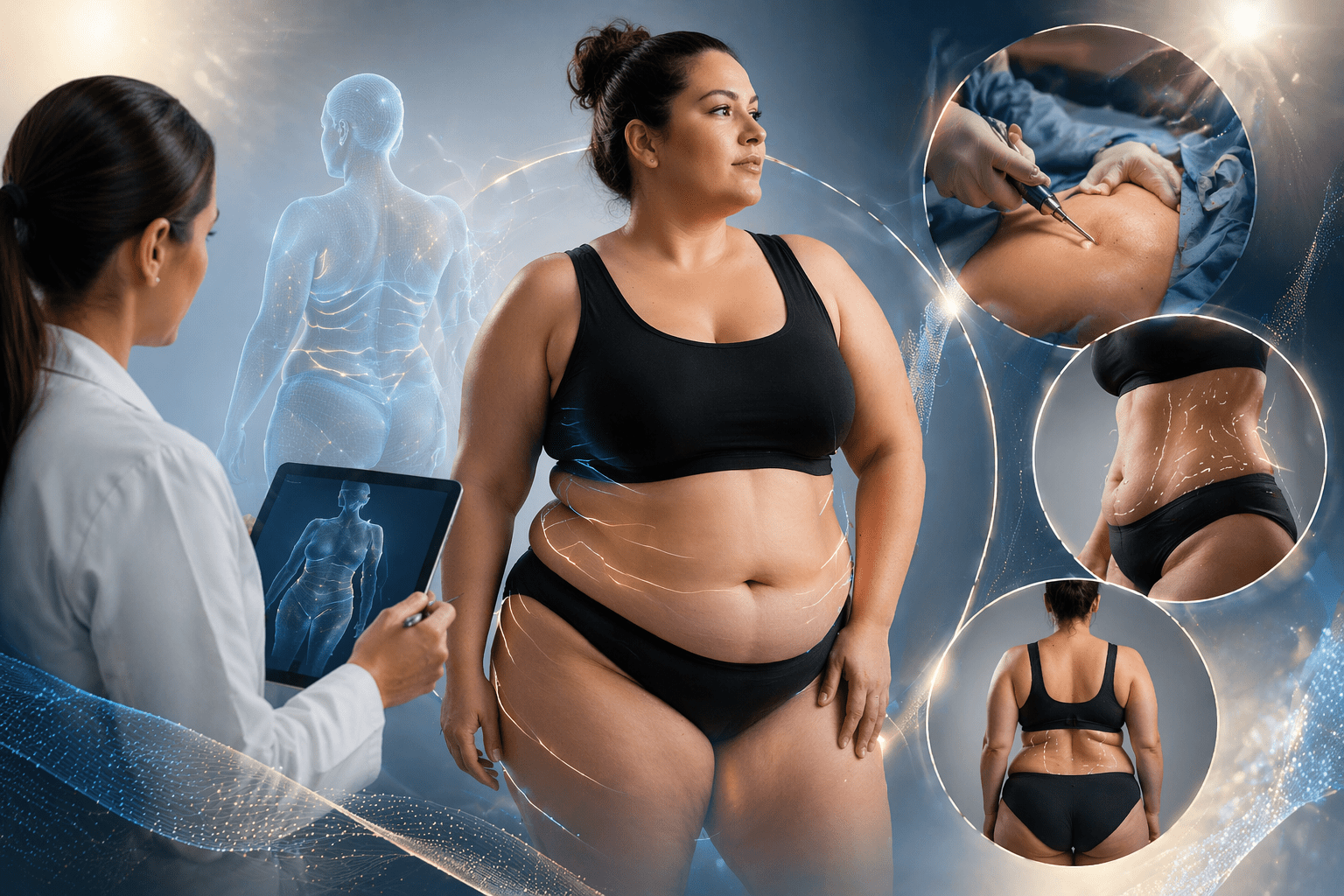
High BMI Lipo 360 is often misunderstood. Many plus size patients consider 360 liposuction hoping for dramatic body transformation, but the reality involves important limitations, risks, and medical concerns.
Before choosing this procedure, it’s important to understand what Lipo 360 involves and how it differs from traditional liposuction.
What Is Considered a High BMI?
Body Mass Index (BMI) is a measurement used to assess body weight relative to height.
General BMI categories:
- 18.5 – 24.9: Normal weight
- 25 – 29.9: Overweight
- 30 and above: Obese
Patients with a BMI over 30 are typically considered higher-risk candidates for elective cosmetic procedures, including liposuction.
Problem #1: 360 Degree Liposuction Is Not Designed for Weight Loss
One of the biggest misconceptions is that Lipo 360 can significantly reduce body weight.
Reality:
Lipo 360 is a body contouring procedure, not a weight loss solution.
Surgeons can only remove a limited amount of fat safely. For high BMI patients, this means:
Need for weight loss before surgery for better results
No dramatic weight reduction
Subtle contour changes instead of major transformation
Problem #2: Higher BMI Increases Surgical Risks
Patients with a higher BMI face increased medical risks during and after surgery.
These may include:
- Greater strain during anesthesia
- Higher risk of infection
- Slower wound healing
- Increased chance of complications
Because of these risks, many surgeons set BMI limits for Lipo 360 procedures.
Problem #3: Limited Fat Removal Per Session
There is a strict safety limit on how much fat can be removed in one procedure.
For high BMI patients, this creates a major limitation:
- Only partial fat reduction is possible
- Multiple procedures may be required
- Results may feel less noticeable
This is why Lipo 360 may not deliver the “before and after” results some patients expect.
Problem #4: Skin Laxity Can Affect Results
Higher BMI often comes with reduced skin elasticity.
After fat removal, this can lead to:
- Loose or sagging skin
- Uneven contours
- Less defined results
In some cases, patients may need additional procedures, such as a tummy tuck, to achieve desired outcomes.
Problem #5: Recovery Can Be More Challenging
Recovery after Lipo 360 can be more demanding for high BMI patients.
Common challenges include:
- Increased swelling
- Longer healing time
- More discomfort during recovery
- Extended use of compression garments
Proper aftercare becomes even more important to avoid complications.
Problem #6: Results May Be Less Dramatic
Many patients expect a significant transformation, but high BMI cases often produce more moderate results.
This happens because:
- Fat removal is limited
- Body proportions remain similar
- Skin tightening is reduced
Setting realistic expectations is critical before choosing the procedure.
Problem #7: Not Everyone Qualifies for Procedure
Surgeons carefully screen high BMI patients before approving surgery.
You may not qualify if you have:
- Uncontrolled medical conditions
- Poor skin quality
- High surgical risk factors
In such cases, doctors may recommend:
Weight loss first
Non-surgical treatments
Alternative procedures
Final Thoughts
High BMI Lipo 360 is possible in selected cases, but it comes with clear limitations and risks. Understanding these problems helps you avoid unrealistic expectations and make safer decisions.
For many patients, combining weight management with body contouring leads to better and more sustainable results.
Medical Reference
American Society of Plastic Surgeons
https://www.plasticsurgery.org
You can also review clinical studies on liposuction safety through PubMed.