
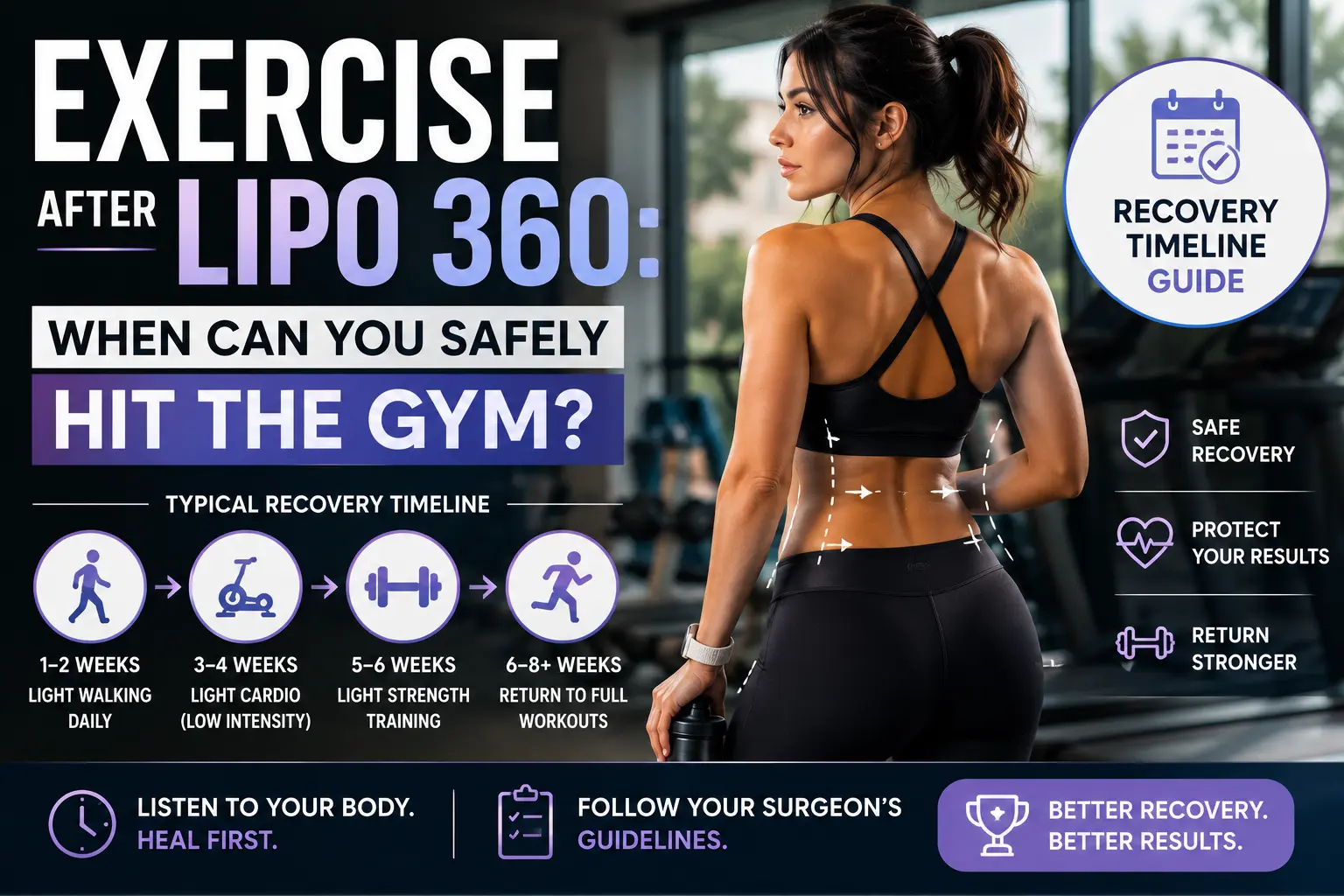
One of the most common concerns patients have after body contouring surgery is knowing when they can safely return to normal workouts. People who exercise regularly often struggle with recovery restrictions because they are used to staying active, maintaining routines, and training consistently throughout the week. This is why questions surrounding exercise after lipo 360 are extremely common during consultation and recovery.
While many patients feel eager to return to the gym quickly, rushing physical activity too soon can interfere with healing, increase swelling, worsen discomfort, and potentially affect final contouring results. Lipo 360 may look like a cosmetic procedure externally, but internally the body still experiences significant tissue trauma during fat removal. The recovery process involves inflammation, fluid shifts, swelling, bruising, and tissue repair that continue for weeks after surgery.
Understanding how healing progresses — and knowing when different forms of activity become safe again — is essential for protecting both your health and your final results.
Why Recovery After Lipo 360 Requires Patience
Lipo 360 targets multiple areas around the torso including the abdomen, waist, flanks, and lower back. Because the procedure treats the body circumferentially, recovery can feel more physically demanding than smaller spot liposuction procedures.
During surgery, fat cells are removed through cannulas that move beneath the skin and through tissue layers. Even though the incisions themselves are small, the internal healing process is much more extensive than many patients initially expect.
After surgery, the body immediately begins responding through:
- Swelling and inflammation
- Fluid retention
- Tissue repair
- Skin retraction
- Bruising and soreness
This is why the early stages of lipo 360 recovery time require careful activity management rather than aggressive exercise or heavy movement.
Patients sometimes assume they can return to workouts as soon as pain improves, but swelling and internal healing often continue long after discomfort decreases.
Can You Walk After Surgery?
Yes — light walking is actually encouraged very early during recovery. Most surgeons recommend short and gentle walking soon after surgery because it helps improve circulation and reduces the risk of complications such as blood clots.
However, walking during the first several days is very different from exercise. Early movement should remain:
- Slow
- Short in duration
- Low intensity
- Focused on circulation rather than fitness
Patients commonly feel tightness, soreness, and fatigue during this stage. Overexertion can worsen swelling and prolong recovery unnecessarily.
Walking should gradually increase as comfort improves, but the body still needs significant energy for healing during the first couple of weeks.
When Can You Return to Cardio?
Cardiovascular exercise is usually reintroduced gradually rather than all at once. Light cardio activities such as treadmill walking or stationary cycling may become appropriate once swelling and soreness begin improving.
However, high-intensity cardio too early after surgery can increase:
- Swelling
- Fluid retention
- Inflammation
- Recovery discomfort
The body is still healing internally even if the patient starts feeling more normal externally.
Many surgeons recommend progressing slowly through recovery stages instead of jumping directly back into:
- Running
- HIIT workouts
- Intense cycling
- Stair climbing
- Sports training
Patients should focus on listening to the body carefully during this period. Increased swelling or throbbing after activity is often a sign that healing tissues are not yet ready for more aggressive exercise.
When Is Weightlifting Safe Again?
Weightlifting usually takes longer to resume safely compared to walking or light cardio. Heavy lifting increases abdominal pressure and places strain on healing tissues throughout the torso, especially after circumferential liposuction procedures.
Exercises involving:
- Core engagement
- Twisting movements
- Heavy squats
- Deadlifts
- Intense abdominal contractions
can feel particularly uncomfortable during early recovery.
Patients often become frustrated because they may feel mentally ready to train before the body has fully stabilized internally. Returning too aggressively can worsen swelling and delay contour settling.
Instead of immediately resuming full training intensity, many patients benefit from:
- Lighter weights
- Reduced workout duration
- Slower progression
- Modified core exercises
- Extended recovery between sessions
This gradual approach helps the body adapt without overwhelming healing tissues.
How Compression Garments Affect Exercise
Compression garments play a major role throughout recovery, especially during the first several weeks. Many patients continue wearing compression during light activity because it helps:
- Control swelling
- Support healing tissues
- Improve comfort during movement
- Reduce fluid buildup
However, exercising in compression garments can also feel restrictive, especially during cardio or warmer weather.
Patients should follow surgeon recommendations regarding:
- How long compression should continue
- Whether garments should remain on during workouts
- When transitioning into lighter compression becomes appropriate
Trying to exercise intensely without proper recovery support can sometimes increase soreness and prolong swelling.
Why Swelling Can Return After Workouts
One of the most confusing parts of exercise after lipo 360 is that swelling often fluctuates for months during recovery. Patients commonly believe they are fully healed, only to notice swelling returning after workouts or long active days.
This happens because healing tissues remain reactive long after surgery. Increased blood flow and physical strain can temporarily trigger inflammation even after major recovery milestones have passed.
Common triggers include:
- Intense gym sessions
- Heat exposure
- Long periods of standing
- Heavy lifting
- High sodium intake
This does not necessarily mean something is wrong. Temporary swelling fluctuations are extremely common throughout the later stages of recovery.
Emotional Challenges During Recovery
For active individuals, temporary exercise restrictions can become mentally difficult. Many patients rely on fitness for stress relief, routine, confidence, and emotional stability. Being unable to train normally may create frustration or anxiety during recovery.
At the same time, some patients fear losing progress they built before surgery. However, short-term recovery limitations are usually temporary and manageable when approached realistically.
The most important thing patients can remember is that recovery itself is part of the transformation process. Protecting healing tissues early often produces better long-term contouring results than rushing back into intense activity prematurely.
Signs You May Be Overdoing Exercise
Patients should reduce intensity and contact their surgeon if workouts trigger:
- Significant swelling increases
- Sharp pain
- Fluid buildup
- Bleeding from incision areas
- Severe tightness
- Dizziness or exhaustion
The body usually provides warning signs when healing tissues are under too much stress.
Progressing gradually almost always produces better outcomes than forcing aggressive training too quickly.
Final Thoughts
Understanding proper timing for exercise after lipo 360 is one of the most important parts of protecting both your recovery and your final body contouring results. While early walking supports circulation and healing, intense workouts and heavy lifting require patience because the body continues repairing internally long after surgery ends.
Every patient heals differently depending on surgical extent, body composition, fitness level, and overall health. Instead of focusing on rushing back into the gym immediately, the goal should be allowing the body enough time to heal safely while gradually rebuilding activity levels in a controlled way.
Ultimately, respecting the recovery process often leads to smoother healing, reduced complications, and better long-term results.
Medical Reference
American Society of Plastic Surgeons
https://www.plasticsurgery.org
Additional clinical information regarding liposuction recovery and post-operative exercise guidelines is available through PubMed.