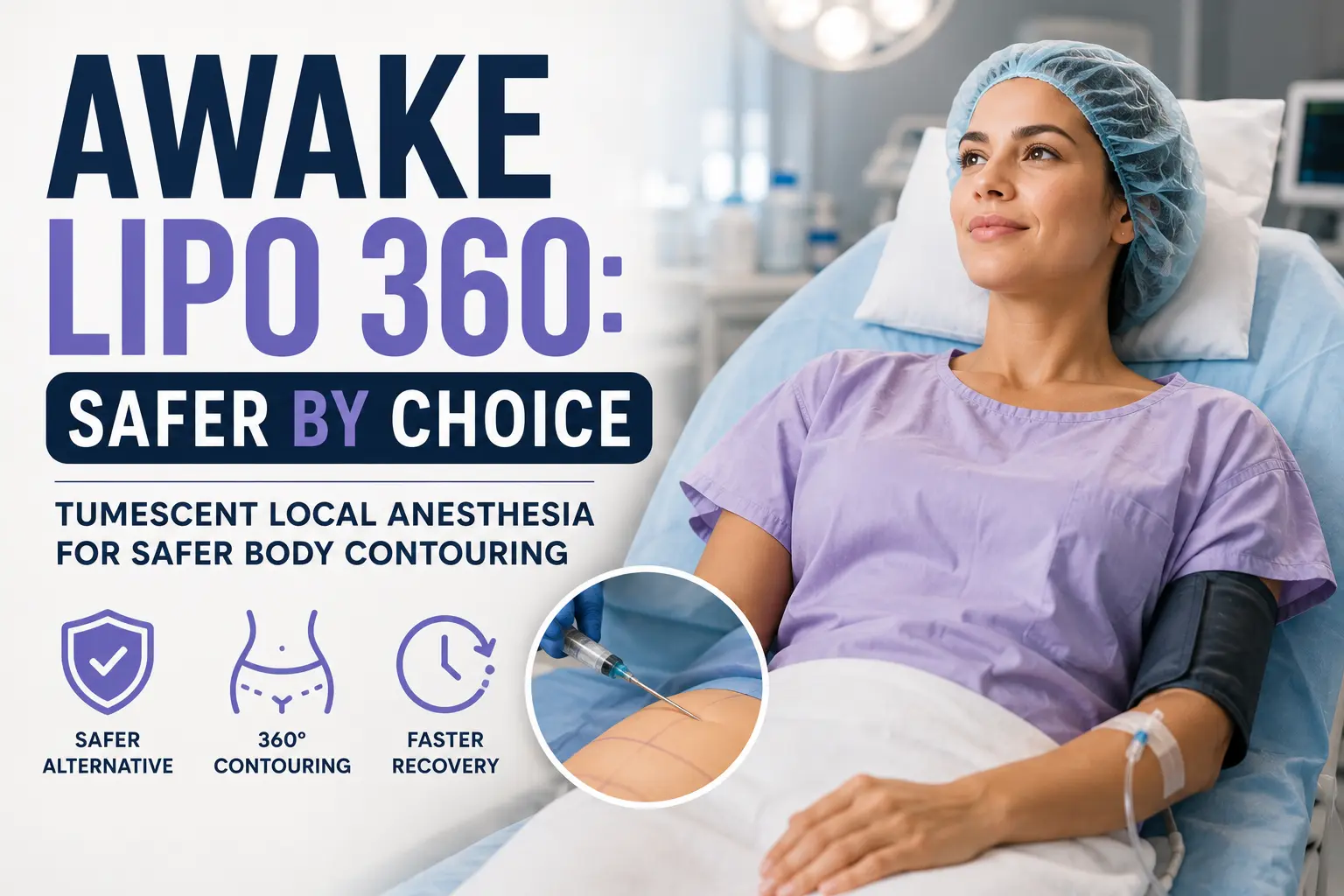
As cosmetic surgery technology continues evolving, many patients are now exploring alternatives to traditional liposuction performed under general anesthesia. One procedure gaining major attention is awake lipo 360, a technique that uses tumescent local anesthesia instead of putting the patient fully asleep. Clinics often market awake procedures as safer, less invasive, and easier to recover from compared to conventional body contouring surgery.
For patients already wondering is lipo 360 dangerous, the idea of avoiding general anesthesia can feel reassuring. At the same time, awake liposuction also creates confusion because many people struggle to understand how a patient can remain conscious during a procedure involving multiple areas of fat removal around the torso.
The reality is that awake liposuction is not a gimmick or shortcut. Tumescent anesthesia has been used in liposuction for decades and plays a major role in many modern body contouring techniques. However, while awake procedures may reduce certain risks, they are not automatically the perfect choice for every patient or every type of body contouring case.
Understanding how the technique works, why surgeons use it, and where its limitations exist is essential before deciding whether awake liposuction is the right approach.
What Is Awake Lipo 360?
To understand awake procedures properly, patients first need to understand what is lipo 360 itself. Lipo 360 is a circumferential liposuction procedure that removes fat from multiple areas surrounding the torso rather than targeting only one isolated region. The surgery commonly treats:
- Abdomen
- Waist
- Flanks
- Lower back
By contouring the torso from all angles, surgeons aim to create smoother proportions and stronger waist definition.
Traditional liposuction is often performed under general anesthesia, where the patient is fully asleep throughout surgery. Awake Lipo 360, however, uses tumescent local anesthesia combined with mild sedation rather than complete unconsciousness.
During the procedure, large amounts of anesthetic solution are carefully injected into the treatment areas. This solution typically contains:
- Local anesthetic medication
- Saline solution
- Medications that reduce bleeding and swelling
The tissue becomes swollen and numb, allowing surgeons to remove fat while the patient remains awake or lightly sedated.
Why Some Surgeons Believe Awake Lipo Is Safer
One reason awake procedures have become increasingly popular is because they may reduce certain risks associated with general anesthesia. While modern anesthesia is generally very safe when administered properly, avoiding full unconsciousness can lower some complications for selected patients.
Potential safety advantages of awake lipo 360 may include:
- Reduced anesthesia exposure
- Lower risk of respiratory complications
- Faster post-operative recovery
- Reduced nausea after surgery
- Earlier mobility after treatment
Because patients remain breathing on their own rather than relying on deeper anesthesia support, some surgeons feel this creates a more controlled and stable surgical environment for moderate liposuction cases.
Tumescent anesthesia also helps reduce bleeding during surgery because the injected solution constricts blood vessels within the treated tissue.
Does Awake Lipo Mean the Procedure Is Pain-Free?
One of the biggest misconceptions surrounding awake liposuction is the belief that patients feel absolutely nothing during surgery. In reality, patients may still experience:
- Pressure sensations
- Tugging movements
- Temporary discomfort
- Mild vibration or pulling feelings
However, the numbing solution is designed to significantly reduce pain throughout the procedure.
Patient comfort levels vary depending on:
- Pain tolerance
- Amount of fat removal
- Length of surgery
- Anxiety levels
- Number of treatment areas
Some patients tolerate awake procedures extremely well, while others may feel emotionally uncomfortable remaining conscious during surgery despite minimal physical pain.
This is one reason why awake procedures are not automatically ideal for everyone.
Is Awake Lipo 360 Dangerous?
Patients searching online frequently ask both is lipo 360 dangerous and whether awake surgery changes those risks significantly. The truth is that all surgical procedures carry risks, regardless of anesthesia type.
While awake liposuction may reduce some anesthesia-related complications, risks can still include:
- Infection
- Fluid imbalance
- Contour irregularities
- Swelling and bruising
- Blood clots
- Skin burns from energy devices
- Overaggressive fat removal
The overall safety of the procedure still depends heavily on:
- Surgeon experience
- Facility standards
- Patient selection
- Surgical planning
- Recovery management
Awake procedures are safest when performed conservatively on properly selected candidates rather than extremely aggressive full-body contouring cases.
Why Tumescent Anesthesia Became So Popular
Tumescent liposuction transformed cosmetic surgery because it allowed surgeons to perform fat removal with less bleeding and greater precision compared to older liposuction techniques. Before tumescent methods became widespread, liposuction procedures often involved:
- Greater blood loss
- Higher complication rates
- Longer recovery times
The introduction of large-volume local anesthetic infiltration dramatically improved both patient comfort and surgical control.
Today, even many liposuction procedures performed under general anesthesia still use tumescent fluid because of its benefits for:
- Bleeding reduction
- Tissue separation
- Swelling management
- Pain control after surgery
In many ways, tumescent anesthesia became one of the most important advancements in modern liposuction safety.
Who Is a Good Candidate for Awake Lipo 360?
Awake procedures tend to work best for patients who:
- Need moderate fat removal
- Maintain realistic expectations
- Are comfortable remaining awake
- Have stable health
- Do not require extremely aggressive contouring
Patients with severe anxiety, extensive treatment plans, or highly complex body contouring goals may still benefit more from traditional anesthesia approaches.
Surgeons also evaluate:
- Body mass index
- Medical history
- Cardiovascular health
- Pain tolerance
- Skin elasticity
- Overall procedure complexity
Proper patient selection is one of the biggest reasons experienced surgeons achieve safer outcomes.
Recovery After Awake Liposuction
Recovery after awake procedures is often marketed as easier or faster compared to traditional liposuction. While some patients do feel more alert initially due to avoiding general anesthesia, the body still experiences significant healing internally after fat removal.
Most patients still experience:
- Swelling
- Bruising
- Soreness
- Compression garment use
- Temporary mobility limitations
Recovery speed depends far more on the extent of liposuction than simply whether the patient was awake during surgery.
Patients should still expect recovery to unfold gradually over several weeks and months rather than assuming immediate return to normal activities.
Limitations of Awake Procedures
Although awake liposuction offers advantages, it also has limitations. Very extensive contouring procedures may become uncomfortable or impractical under local anesthesia alone.
Some surgeons prefer general anesthesia for:
- Large-volume fat removal
- Combined procedures
- Extended surgical times
- Highly detailed contouring work
This does not mean one method is universally superior. The safest and most effective approach depends on the patient’s anatomy, goals, procedure extent, and surgeon expertise.
Patients should be cautious of clinics marketing awake liposuction as completely risk-free or dramatically superior in every situation.
Final Thoughts
Awake Lipo 360 using tumescent local anesthesia has become increasingly popular because it may reduce certain anesthesia-related risks while allowing effective body contouring in selected patients. For individuals concerned about general anesthesia or wondering is lipo 360 dangerous, awake techniques can offer a reassuring alternative when performed responsibly by experienced surgeons.
However, no cosmetic surgery procedure is entirely risk-free. The most important safety factors remain surgeon expertise, proper patient selection, realistic expectations, and careful recovery management. Whether performed awake or under general anesthesia, successful body contouring depends far more on surgical planning and responsible care than marketing trends alone.
Medical Reference
American Society of Plastic Surgeons
https://www.plasticsurgery.org
Additional clinical research regarding tumescent anesthesia and liposuction safety is available through PubMed.