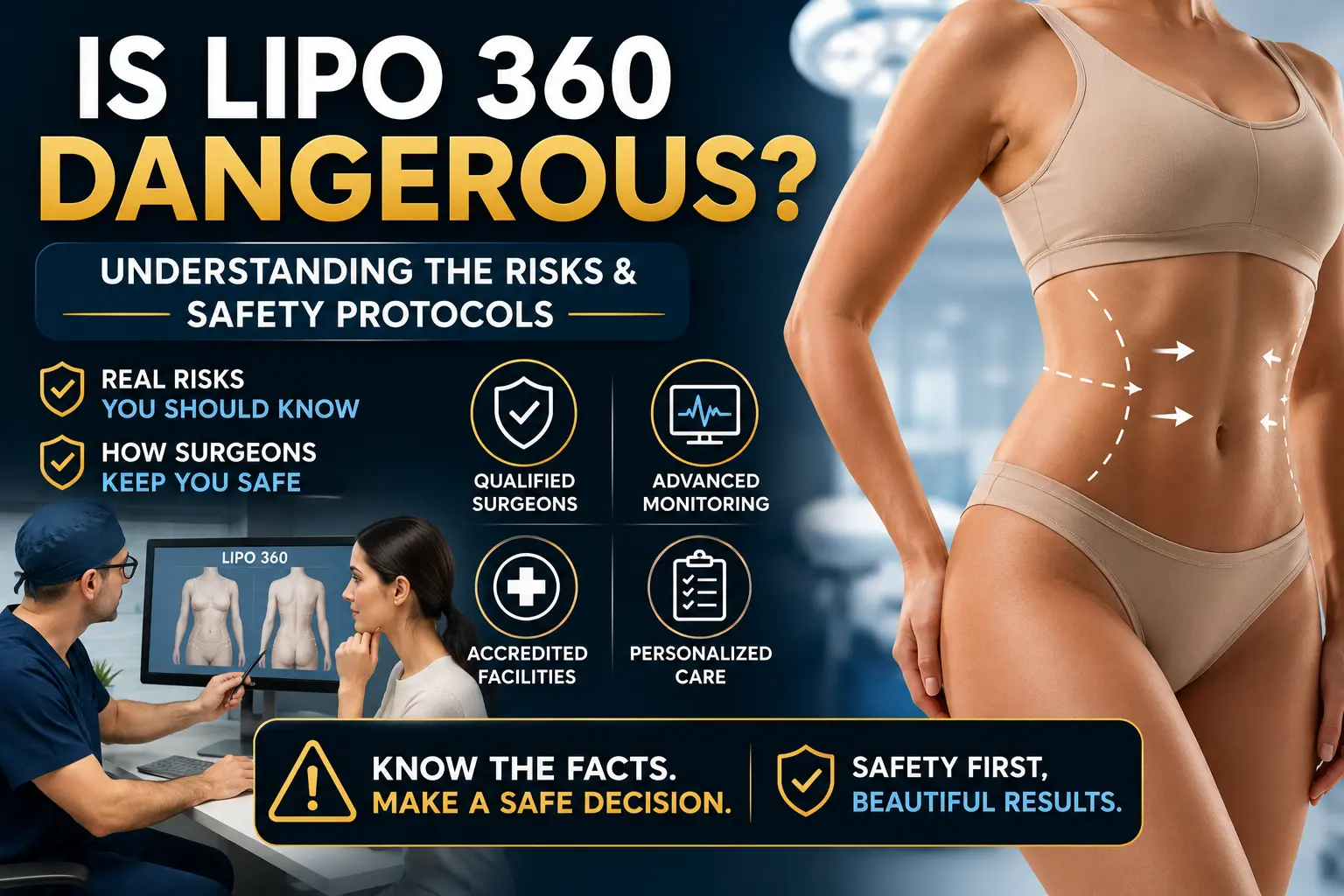
As body contouring procedures continue growing in popularity, many patients naturally wonder: is lipo 360 dangerous? Social media often focuses heavily on dramatic before-and-after transformations while spending far less time discussing recovery realities, surgical risks, and patient safety. While Lipo 360 can produce significant body contouring improvements for the right candidate, it is still a real surgical procedure that carries medical risks like any operation involving anesthesia, fat removal, and tissue trauma.
At the same time, online discussions about cosmetic surgery can become extremely polarized. Some sources portray Lipo 360 as highly dangerous, while others market it as a simple “lunchtime transformation” with minimal recovery. The truth lies somewhere in the middle. Modern liposuction techniques are generally considered safe when performed by qualified surgeons on properly selected patients, but complications can still occur if procedures are performed aggressively, irresponsibly, or without proper medical oversight.
Understanding how the surgery works, what risks actually exist, and how experienced surgeons minimize those risks is essential for making informed decisions before undergoing body contouring.
What Is Lipo 360?
Lipo 360 is a circumferential liposuction procedure designed to remove fat around the entire midsection rather than targeting only one isolated area. Surgeons typically contour:
- Abdomen
- Waist
- Flanks
- Lower back
By treating the torso from multiple angles, the procedure aims to create smoother body proportions and stronger waist definition compared to traditional spot liposuction.
The procedure may involve:
- General anesthesia
- Local anesthesia with sedation
- Energy-assisted technologies
- Fat transfer procedures in some cases
Because larger areas are often treated during one operation, Lipo 360 can become more physically demanding than smaller liposuction procedures. This is one reason why careful surgical planning and patient safety protocols are extremely important.
Is Lipo 360 Safe?
A more accurate question than “is lipo 360 dangerous” is actually: is a lipo 360 safe when performed correctly? In properly selected patients under qualified medical supervision, modern liposuction procedures are generally considered safe. However, safety depends heavily on:
- Surgeon experience
- Facility standards
- Patient health
- Amount of fat removed
- Recovery monitoring
- Surgical technique
Complications become more likely when patients choose inexperienced providers, undergo excessively aggressive contouring, or fail to follow post-operative instructions properly.
Board-certified surgeons operating in accredited surgical facilities usually follow strict protocols designed to reduce risk throughout every stage of treatment.
The Most Common Risks of Lipo 360
Like all surgeries, Lipo 360 carries both minor and serious potential complications. Most patients experience temporary and expected recovery symptoms such as:
- Swelling
- Bruising
- Soreness
- Fluid drainage
- Temporary numbness
These are considered normal parts of healing rather than dangerous complications.
However, more serious risks may include:
- Infection
- Blood clots
- Fluid accumulation
- Irregular contouring
- Skin burns from energy devices
- Excessive bleeding
- Anesthesia complications
Although severe complications are uncommon when surgery is performed responsibly, they are still medically possible. This is why honest consultation and patient education are extremely important before surgery.
Why Some Lipo 360 Cases Become Dangerous
Most dangerous cosmetic surgery stories involve a combination of preventable risk factors rather than the procedure itself alone. Common contributors to unsafe outcomes include:
- Unqualified providers
- High-volume surgery centers
- Excessive fat removal
- Poor emergency preparedness
- Inadequate patient screening
- Multiple aggressive procedures combined together
Patients sometimes underestimate how physically stressful large-volume liposuction can become. Removing excessive amounts of fat during a single surgery may increase risks related to fluid shifts, blood loss, prolonged anesthesia exposure, and recovery complications.
Some clinics also market unrealistic transformation promises that encourage overly aggressive contouring beyond what is medically appropriate.
This is why surgeon ethics and surgical judgment matter just as much as technical skill.
The Importance of Proper Patient Selection
Not every patient is an ideal candidate for Lipo 360. Safe body contouring begins long before surgery through proper medical evaluation and realistic treatment planning.
Good candidates are usually individuals who:
- Are in stable overall health
- Maintain realistic expectations
- Have manageable body weight
- Do not smoke heavily
- Have acceptable cardiovascular health
- Understand recovery responsibilities
Patients with certain underlying medical conditions may face higher surgical risks and sometimes require additional clearance before undergoing cosmetic procedures.
A responsible surgeon should thoroughly review:
- Medical history
- Current medications
- Previous surgeries
- Weight stability
- Skin quality
- Recovery expectations
Rushed consultations or minimal pre-operative screening should be viewed as warning signs.
How Modern Safety Protocols Reduce Risk
Cosmetic surgery safety has improved significantly over the years due to advances in technology, anesthesia, monitoring systems, and surgical standards. Today, experienced surgeons typically follow extensive protocols designed to reduce complications throughout the surgical process.
Important safety measures often include:
- Accredited surgical facilities
- Strict sterilization procedures
- Careful fluid management
- Compression therapy after surgery
- Early walking during recovery
- Detailed post-operative monitoring
Modern anesthesia techniques have also become safer and more precise when administered properly by qualified professionals.
Many surgeons now limit surgical volume carefully to reduce physical stress on the body during large contouring procedures. Rather than removing extreme amounts of fat aggressively, experienced providers often prioritize balanced contouring with patient safety as the primary goal.
Recovery Risks Patients Often Ignore
One of the most overlooked aspects of safety is post-operative recovery. Patients sometimes focus entirely on the surgery itself while underestimating how important recovery behavior becomes afterward.
Complications may become more likely if patients:
- Ignore compression instructions
- Become dehydrated
- Resume exercise too early
- Fail to walk during recovery
- Miss follow-up appointments
- Travel immediately after surgery without precautions
Swelling and soreness are expected, but symptoms such as severe shortness of breath, chest pain, high fever, or excessive asymmetrical swelling require immediate medical attention.
Following post-operative instructions carefully is one of the most important ways patients can help reduce complications.
Are Combined Procedures More Dangerous?
Many patients combine Lipo 360 with:
- BBL procedures
- Tummy tucks
- Skin tightening treatments
- Breast surgeries
While combination procedures can improve efficiency and overall contouring, they may also increase surgical time and physical stress on the body.
Longer operations generally carry higher risks related to:
- Anesthesia duration
- Blood loss
- Recovery complexity
- Swelling and fluid shifts
This does not mean combined procedures are automatically unsafe, but it does make surgeon judgment and patient selection even more important.
How to Choose a Safer Surgeon
One of the most important safety decisions patients make is selecting the right surgeon. Patients should prioritize:
- Board certification
- Accredited surgical facilities
- Transparent consultations
- Consistent patient outcomes
- Clear discussion of risks and recovery
Be cautious of:
- Unrealistically low pricing
- Guaranteed results
- Extremely aggressive transformations
- High-pressure sales tactics
- Limited recovery support
A trustworthy surgeon should openly discuss both benefits and risks rather than presenting the procedure as completely risk-free.
Final Thoughts
So, is lipo 360 dangerous? Like any surgical procedure, it carries real medical risks. However, when performed by qualified surgeons in properly selected patients using modern safety protocols, Lipo 360 is generally considered safe and effective for body contouring.
The biggest safety factors are not social media trends or marketing claims, but surgeon expertise, responsible surgical planning, realistic expectations, and proper recovery care. Patients who approach cosmetic surgery thoughtfully, research providers carefully, and prioritize safety over shortcuts are far more likely to experience successful outcomes and smoother recoveries.
Medical Reference
American Society of Plastic Surgeons
https://www.plasticsurgery.org
Additional medical research regarding liposuction safety and surgical risk management is available through PubMed.